

Strata – Printing Homes for those displaced by borders
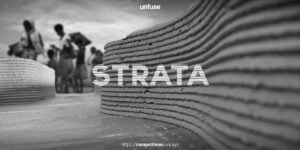
PREMISE
The biggest democracy in the world, India, is also quickly becoming the epicenter of one of the biggest refugee crises in the world. Assam, a border state in the nation, owing to its geographical location and shared international frontiers has been facing the brunt of this influx since as far back as 1951.
A National Population Register was put into effect after the 1951 Census of India, and a lengthy battle that the natives fought with authorities. In the first draft of the updated NPR released in September 2019, roughly 1.9 Million people have been excluded. Even as the region remains in political and social turmoil, the government has sanctioned the construction of at least 11 more detention camps across the state to house people excluded from the register.
At present, a majority of the people whose name didn’t make it into the draft are housed in camps in existing prisons across the state. In-human living conditions inside camps and prisons have been reported, apart from overcrowding and a lack of resources. Fear and depression among detainees is extremely common owing to an uncertain future. Even with the detention camps in place, dignified living for the detainees remains an unattainable target.
Several nations have gauged into a low cost, alternate construction methods to house their growing refugee and desolate population. 3D printing has emerged in that sphere as a dominant technology, a potential solution, that can achieve an economy of construction in record time, along with the structures being seismically and thermally resilient. India’s Assam and Rohingya situation is being termed only the second biggest humanitarian refugee crisis after Syria in the world. Can the nation to employ this progressive technology to house its detainees?
CHALLENGE
The challenge is to design an assembled accommodation, and thereafter a neighborhood, to absorb the rising and foreboding crisis in Assam using the principles of 3D printing construction.
The challenge is to employ the technology to achieve dignified residences for the displaced families. Participants must design a singular modular unit for 3D printing keeping in mind the design objectives. The same unit must then be used to design an entire neighborhood comprising of 150 households on the given site.
Short Description
India’s Assam and Rohingya situation is being termed only the second biggest humanitarian refugee crisis after Syria in the world. Can the nation to employ this progressive technology to house its detainees?
Organizer
UNFUSE
Link to Competition

Link to Registration form
Prizes
Prize pool of worth 5000$
First Prize: 1500$ (For students and professionals)
Runner up: 800$ (For students and professionals)
People’s Choice: 450$ (For students – Most appreciated project wins this)
People’s Choice: 450$ (For students – Most appreciated project wins this)
Honorable mention x 2 (Students): 200$ Each
Honorable mention x 2 (Professionals): 200$ Each
Type of Competition
Open to the public/Minimum requirements (Open to anyone that complies with the requirements), Single stage (Winners selected immediately)
Who can Participate
The minimum eligible age for participation is 18 years.
There is no restriction on the degree of design disciplines to participate in the challenge.
Participation in the competition can happen in a team as well as an individual.
The maximum numbers of participants in a team are 4.
Dates and Time Frame
Registration Closes September 7, 2020
Deadline to Submit Project September 22, 2020
Winners announcement Date November 26, 2020
Languages
English
Location of Competition
Worldwide
