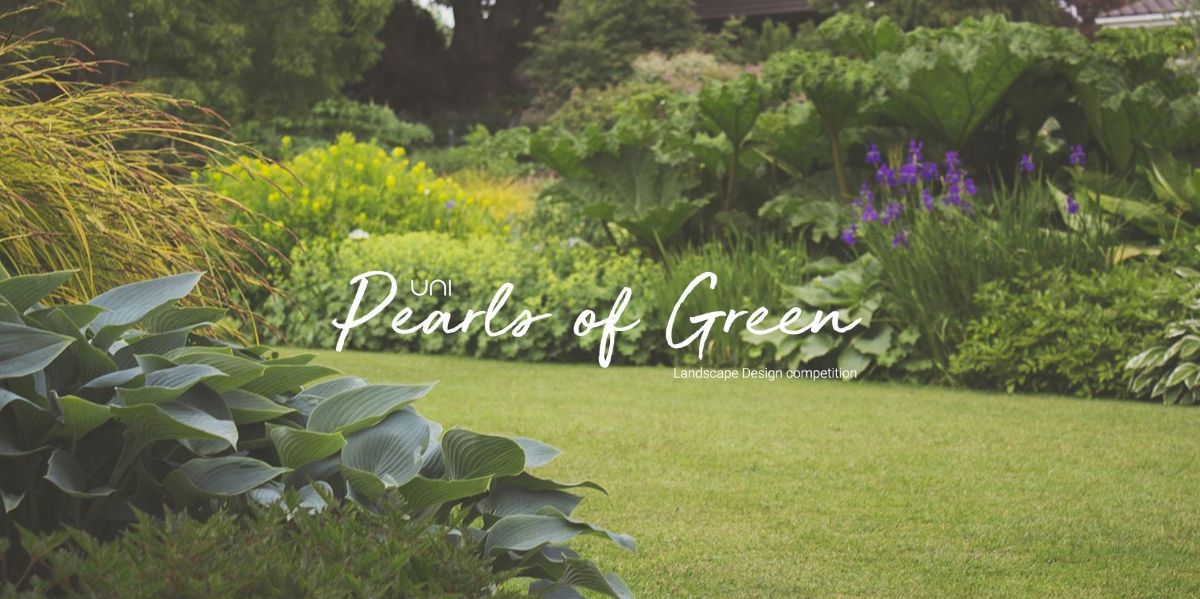
Pearls of green – Landscape design competition
The Glory of GardensGardens have existed since 1400 BC, and with time their function evolved from being places of leisure to powerful displays of status. The huge gardens were symbolic of the authority of man over nature, and principles of proportionality and symmetry were used to design them. In those times, the grandeur of the garden was prioritized, rather than its leisure purpose.Different places have green spaces designed for a range of purposes, tailored to the geographic location as well as social settings.
The designing of these spaces was considered an art, combined with science and knowledge of plants, biology, and the detailing of finer things involved.Throughout history, garden designing flourished, with influences borrowed from many cultures. Technology helped us create designs that were more efficient and relevant. But as global trends of formal, tropical, and edible gardens became popular, the regional concepts of designing were lost with time.Does the conceptual aspect of garden designing require our attention?
The Art of Hide and SeekMiegakure is a concept that is an integral part of the Japanese garden culture, where elements of interest are hidden in partial or complete concealment from the viewer’s perspective as they follow a dedicated path. The anticipation that is built, acts as an incentive to continue the walk, experiencing a sense of awe, during the reveal. With the desire to explore every corner of the garden, the visitor’s attention is immersed in the experience and they establish a connection with the art of gardening and nature itself.
The origin of the Miegakure concept was with Chinese paintings, where they employed this method, by leaving ‘blank’ spaces, that gave the illusion of elements being hidden in misty white clouds. Alteration of perspective gives depth to any landscape architecture. These forms of gardens play with people’s visual perception by framing the views of nature in an unsuspecting manner. While this concept is not unknown, it has yet to be reproduced into space, other than in its land of origin.How can we recreate the essence of this ancient art form into public garden design?Brief of the competition‘Hide and Reveal’ is the essence of this concept and this dynamism generates a sense of rhythm.
With this, the movement of light and darkness, the active and passive nature of spaces, and expansion and contraction in the layout are felt intensely by the person experiencing the garden. Brief: The challenge of the competition is to design a park that is dedicated to the ‘Miegakure’ form of garden design.
The essence of Miegakure must be extracted in the design. The entire landscape architecture must not be discerned from a single viewpoint. A sequence of views must be created and imagined as a composition from the viewer’s experience. Achieving harmony and balance is paramount.
The challenge here is making the geographical constraints of the site work in favor of the design. Playing with the levels on-site can help provide various iterations for design concepts. Transformation of spaces through framing or concealing, and the transition of the viewer’s gaze while walking on a fixed path, must be seamless.
Competition Objectives
Layout – the existing terrain must be studied to design the layout and create areas/zones in the park design. Decide on what must be retained and what can be removed with justification.
User experience – the concept of Miegakure must be used as a tool of design for the park and its representation must be presented in the form of a narrative from visitor view.
Context – the culture, heritage, and environmental conditions of the old park and the city must be taken into consideration while designing. Sustainability – Local biodiversity must be incorporated. The design of the park must reduce air pollution, urban heat island effect and noise pollution, and other site issues. There must be no wastage of resources and harm inflicted on the site.
Short Description
The challenge of the competition is to design a park that is dedicated to the ‘Miegakure’ form of garden design.
Organizer
UNIEGIS
Link to Competition
Link to Registration form
Prizes
Winner 6000$
Runner – Up – 1400$
6People’s Choice – 600$
Honorable Mention – 600$ x 12
Type of Competition
Open to the public/Minimum requirements (Open to anyone that complies with the requirements), Single stage (Winners selected immediately)
Who can Participate
The minimum eligible age for participation is 18 years.The competitions are open worldwide for designers from any discipline.You can participate as an individual or as a team of a maximum of 4 members.All students and professionals can participate in the competitions.
Dates and Time Frame
Registration Closes November 1, 2021
Deadline to Submit Project November 2, 2021
Winners announcement Date December 30, 2021
Languages
English
Location of Competition
Chicago
Banner, Poster, Brochure or Triptic of Competition