
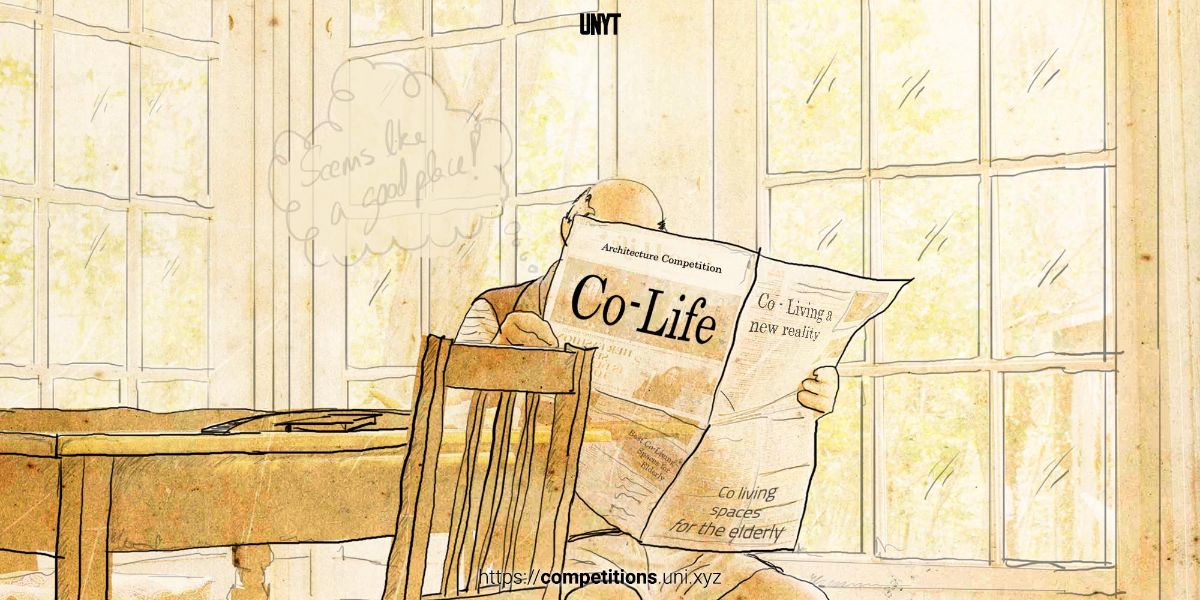
Co-life – Co-living for elderly

PREMISE
Population aging – an increase in the proportion of older people in a population.
As one of the most significant social changes of the 21st century, it is predicted to impact all sectors including labor and financial markets, housing, health care, and social protection.
By 2050, the global population aged 60 years or over is expected to double reaching 2.1 billion. Increased life expectancy and decreased fertility rates mean that older populations in developing regions are growing at higher rates when compared to those in developed regions. Estimations project that by 2050, 79 percent of the world’s older population will be living in developing regions.
Even though an increase in longevity indicates an increase in the standard of living, population aging comes with its own pros and cons.
While worldwide estimates of older populations living on their own vary, there has been a significant increase in this percentage, along with a decrease in the percentage of the older generation wanting to co-reside with their children or extended family.
On the flip side, studies have also shown an increase in social and health concerns with regard to the older population. With a focus on the psychological wellbeing of the older population who live independently, showing the negative effects of social isolation and neglect of self-care needs.
In light of this, how can we as designers recognize the needs of the older generation, with a focus on housing and social protection? How can they be addressed? How can we navigate these changes?
CHALLENGE
Understanding the need to create a mutually supportive community, in which elderly individuals can live independently, and be cherished for their individual capacity means that we are well on our way to question existing social structures.
In doing so can we recognize and cater to self-care and appropriate housing needs for the elderly and work towards establishing a community framework of mutual support, questioning a much wider narrative of how society perceives the elder generation.
Short Description
Population aging – an increase in the proportion of older people in a population. As one of the most significant social changes of the 21st century, it is predicted to impact all sectors including labor and financial markets, housing, health care, and social protection.
Organizer
UNYT
Link to Competition

Link to Registration form
Prizes
Prize pool of worth 20,000$
First Prize: 5000$ (For students and professionals)
Runner Up: 6 x 1100$ (For students and professionals)
People’s Choice: 4 x 600$ (Open for all)
Honorable Mention x 12: 500$ Each
Type of Competition
Open to the public/Minimum requirements (Open to anyone that complies with the requirements), Single stage (Winners selected immediately)
Who can Participate
The minimum eligible age for participation is 18 years.
There is no restriction on the degree of design disciplines to participate in the challenge.
Participation in the competition can happen in a team as well as an individual.
The maximum numbers of participants in a team are 4.
Dates and Time Frame
Registration Closes May 1, 2020
Deadline to Submit Project May 12, 2020
Winners announcement Date June 22, 2020
Languages
English
Location of Competition
Rabat, Morocco
Additional Information
